Saturday, April 4, 2015

D is for Djibouti

Djibouti beat out drama and Devil's Teeth Rapid in today's fierce competition to represent the letter "D" in the A to Z Blogging Challenge. In the event that Djibouti cannot fulfill its term, the first and second runnerups, drama and Devil's Teeth Rapid, will take Djibouti's place in fulfilling any remaining obligations.

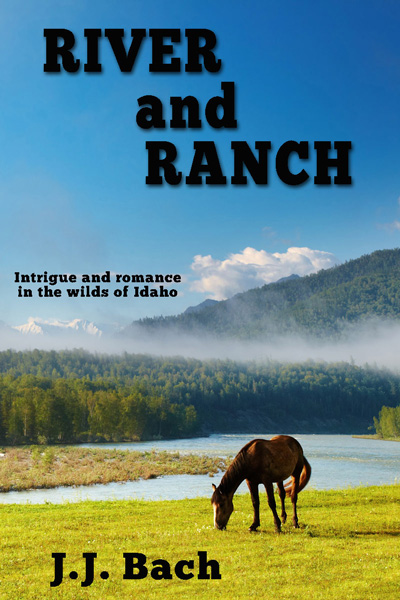
With that bit of contractual paranoia now firmly in the rear view mirror, we can plow new ground in furthering the background of River and Ranch which, as mentioned before, is at times ripped straight from the headlines and at other times merely from researching.

Cale and Lane are two of the MCs in River and Ranch. In a long running series though, there has to be room to go back in time and develop earlier episodes and pieces of storyline. Africa proves fertile ground for that. Even better, the quiet roar that is the steady growth of AFRICOM, provides abundant bits of truth, which I greatly enjoy using as the kernel of truth around which my fiction is wrapped.

Camp Lemonnier is the USA military's largest and most official entity in all of Africa. I'm tempted to ramble through the interesting history of this military post. Suffice it to say that a garbage filled swimming pool, the French Foreign Legion, and free roaming goats are all part of that history. If pool, goats, and French Foreign Legion all appearing in the same sentence have piqued your curiosity, by all means click on the link above and read up on the abundant details in the excellent Wikipedia entry on the Camp.

In today's first digression, a bit of mostly relevant history pops into my head. The USA's entry into the European theater of WWII started with an invasion force going ashore in north Africa. In relying on memory and distilling what I remember, some small part of the reasoning for this first step was that the US military was "rusty". Not much had been done since WWI and there were very few leaders or followers with live experience. So the first step was on African soil, because it was perceived as perhaps the easiest place to start and get some seasoning (for lack of a better word). The big players in WWII got up to speed fighting (and getting beat quite often) by the wily old desert fox, Erwin Rommel, as he was known. Eventually he was pounded into submission, as Americans then as now are the badasses of the planet and while we lose on occasion, we do not give up and eventually emerge standing on top (sorry my American pride and ego popped up there).

Fast forward to now and these first "official" steps on African soil may remind some of first steps taken back in the day by Eisenhower and his fighting forces. There are many many differences, but I do bring this bit of history up as it is interesting to see steps made on African soil, a couple generations apart. Afghanistan and Iraq are of course HUGE differences between then and now, but steps onto Africa are facts then and now. Then it was over on the coast of Morocco, heading towards Libya. Now, it is the Horn of Africa aimed at the Sahel and points unknown or undivulged.

The shepherd's hook is out and the music is growing louder. I must concede the floor and hope that you will return for tomorrow's monologue on the letter "E".

Friday, April 3, 2015

C is for China Bar

Mile 269 on the Salmon River marks the Lemhi Bar, which many know as China Bar. Cale floats by it on every trip he takes in River and Ranch. As a guide myself, back in the 80s, I did too. It is one of the many many spots on the river that were mined and lived and homesteaded and probably more. From 1882-1884 Chinese miners toiled on this spot. How they got there, other than packing in from Warren, history does not say. Who they were, history does not say. Where they went afterwards. Unknown. How they spent their money/gold, likewise unknown. Then as now "the Orientals" were known and seen as hard working and quiet, likely due to language issues more than anything. Most everyone I think, just left them alone.

I see a big gap when I read about "Orientals" in historical non-fiction. Remember that "China" did not exist back then. Other than "the Orient", I'm not sure what present day China was called. It's not that the authors were prejudiced. I don't see that coming out. What I see is a vacuum. Somehow these men (and a few women) from "the Orient" got here. How? Few have written about this. Who were they? Again very little is known. In most accounts these recent arrivals landed on the West Coast, most in San Francisco, put their heads down and carried on. Some went all the way to the Salmon River. Why there? Some spent two years of their life mucking around in a placer mine at mile 269. Then one day they left. Why? Poor returns for their effort is the likely answer, but history does not record any interview with them. Could they speak English? Could any European guys speak Chinese? Was their language even known as Chinese? Maybe it was Cantonese? China as we know it now, did not exist back then. What did exist was a country with a 5k+ year history, while the US was 1/50th of that at the time.

Writing River and Ranch fascinates me, although at this point rewriting and editing are the better terms. I started out simply wanting to write about what I know. Digging in and looking for background in this effort, is every bit as interesting as writing the original fiction that comes from the history I peruse. As a fortunate citizen of the USA I am left with a sense of awe (for lack of a better word) at what our predecessors did. China Bar is a good example. The effort just to get there. The effort to survive and simply feed yourself. Back then it was just what people did. No big deal. Part of everyday life. Just think though. No roads. No grocery stores. Rice. If I stay in line with the stereo type and it is at least partially true, where did "the Orientals" get rice? My knowledge of American history does not have anything about rice being grown in the U.S., especially on the west coast of the late 1800s. I find it interesting to wonder about the shock they faced as they likely had to leave behind the main staple of their lifelong diet and adjust to whatever was locally available.

Back in the day (1978) Johnny Carrey and Cort Conley published, via Backeddy Books, what I regard as one of the best non-fiction books ever. "River of No Return" is a simple tome that starts upstream and works downstream discussing the humanity that left their marks on the Salmon River along the way. Tons of pictures, all in black and white, support simple clear and interesting writing that these two somehow garnered from interviews, archives and I don't know what else. They did a masterful job and deserve much credit for what looks to me like a labor of love as well as a labor that no doubt required numerous trips down the river. Lucky them!

Thursday, April 2, 2015

B is for Bitterroot

"River and Ranch background" seems to be a pretty good theme for this A-Z blogging challenge. Much of River and Ranch takes place on the other side of Lost Trail Pass, in Idaho. However, two of the main characters, Cale and Lane, are working on their PhDs in Geology at the University of Montana up in Missoula. To get to Idaho from Missoula, you go south, UP the Bitterroot Valley.

In this way do we arrive at the first cool thing about Bitterroot. In keeping with this notion of geology, the Bitterroot Valley is generally a north-south oriented feature. No big deal there. However, within that valley, the Bitterroot River flows NORTH, joining the Clark Fork river just west of Missoula. That would be the cool feature. From your childhood social studies you might remember the Nile over in Egypt, as perhaps the most prominent north flowing river on the planet. The Bitterroot joins that small club of north flowing rivers. So up the valley is down south. Downstream is up north.

Those map lovers in the crowd may have also noticed that the Middle Fork of the Salmon, another major feature in this book series, is also a north flowing river. One might wonder why two major rivers, fairly close together, both flow north. At a regional level, my first thought points at a centrally located uplift event on the North American continent that would serve to start water flowing north. The main bulk of the Rocky Mountains, mostly to the south of both rivers comes to mind. The Laramide orogeny is the geologic term for the continental plate deformation (aka upthrusting) that kicked off the ascent of the Rockies. That would be the event that gets my finger of blame for inspiring the northward flow of both the Bitterroot and the Middle Fork.

History provides another topic for Bitterroot. Lewis and Clark made their way over the southern terminus of the Bitterroot valley at Lost Trail Pass. The group made their way down the Bitterroot valley, all the way to the stream now known as Lolo. At that confluence they turned west and headed up the Lolo valley (Collins Creek), eventually topping out on Lolo Pass and descending down the Lochsa drainage and ultimately the Clearwater River, as the group made its way to the Pacific. Notes from both men reveal this segment of their journey to be among the most trying portions of their entire trip. Speaking of notes, many people have spent time retracing the path that Lewis and Clark chose as they crossed the continent. The Lewis and Clark Fort Mandan Foundation provides extensive content relating to the initial journey of discovery as well as the myriad followup expeditions that others made in an effort to retrace those famous first steps.

Wednesday, April 1, 2015

a book about Idaho and fishing and romance with roots in Africa

I think we can all accept as fact that "A" is for Africa.

River and Ranch is one book in a series. I'm starting towards the back of the series because that's how I started out with my set of characters and places. As River and Ranch matured in my head, the back story and where I wanted to go developed. So there's lots more in the past and in the future. But for now Cale and Dana are in Idaho.

Africa is one of those places in the past for Cale and his partner Lane. The bulk of their time in Special Operations Forces was spent on African soil in numerous countries chasing the bad guys. In between missions they were in places like Camp Lemonnier, Djibouti, or Ouagadougou, Burkina Faso.

Researching the African part of this plot is fascinating. In reality, the US is very active on the African continent. As is China I might add. Neither of which makes many, if any, media headlines. The largest U.S. military presence is in fact at Camp Lemonnier in Djibouti. There is in fact, another outpost in Ouagadougou, Burkina Faso. I'm a big fan of geography, so while I had heard of Djibouti and Burkina Faso, I had no idea where they were, and I had not heard of either of the locations.

The U.S. military's pivot into Africa was one of the two the biggest surprise of all though, in doing my research. In reality, there is much going on throughout the African continent, much of it tangentially related to the growing Chinese presence on that continent, but probably more related to the concern over the growing likelihood of terrorist operations taking place in several remote, near lawless locations in the African outback. All of which is perfect back story for the characters in River and Ranch.

Hang tight for that other big surprise uncovered in research. Unfortunately it comes more toward the end of the alphabet, the letter "r", but it is a significant surprise and cornerstone of many plot lines in this series. Truth is indeed stranger than fiction at times.

Tom's Dispatch offers up a great article on this U.S. military activity in Africa.

I hope you will tune in tomorrow for that thrilling letter "B".

Thursday, March 26, 2015

Art Imitates Life?

Let's just call River and Ranch contemporary fiction, or maybe a new Western, or maybe even a sweet romance. Whatever I call it, it is based on several realities. One reality in particular just keeps on giving. The geology of the Lemhi Pass area, contains rare earth minerals. Some would call them deposits, ores, or formations. Regardless of what to call them, rare earths really do exist and they really do have a crucial place in the real world. The iphone or Samsung Galaxy you could conceivably be reading this on right now, in fact, contains rare earth metals refined from ores that were likely mined in China. Over the next few years that could change as the mining company holding the claims on Lemhi Pass could conceivably begin activity on their claims.

What makes this unique is that much of what is on those claims are tailings piles that have already been mined from existing works. New mining is not required, rather new mining could actually be described as transporting old tailings. This is a unique circumstance, maybe even historical. I find it fascinating and well worth following.

The major challenge for US-based rare earth miners is the complete lack of US-based processing ability and facilities. Not only does China have a stranglehold on production of the raw materials, China contains virtually all of the knowledge the world has on processing and refining the raw ores into concentrated metals ready for industrial use.

The real life story of rare earth metals is fascinating, not only for the geology of it, but for the issues surrounding rare earths. How to revive a refining industry that has been dormant for decades, how to raise cash for building new facilities, even new research that is suggesting new ways to process not only rare earths from its host materials, but rare earths from each other. There are seventeen rare earth minerals and they mostly occur together. Industry needs them apart. Yet one more critical step in the workflow that only China seems to understand.

Will American ingenuity and brain power comes to the rescue? This is not a heading from a book. It is a headline that one could see in a newspaper. One more case of truth equaling the strangeness typically found in fiction!

Wednesday, March 12, 2014

snowpack is holding up...

In Cale's world of rafting the Salmon River and the Middle Fork, much depends on runoff from snowmelt. So rafters spend much of their winter huddled around basin snow reports like this:

Here's the real snowpack report. High water is a spring thing, but summer water on the Idaho rivers often arrives with the July 4th launches. In my memory, the launch closest to July 4 was a big double launch and kicked off summer. You could kind of get away with not wearing a wetsuit. Finally. Prior to that though, as in all of June and May, rafting had to deal with cold high runoff. On undammed rivers like the Middle Fork and the Main, runoff can be an amazing thing. When you see how strong high water is during spring runoff, you start to understand how 20,000 foot peaks can be reduced to sand on a beach. On the map above, the Salmon Basin is looking pretty much average, which should make for a decent rafting season. What stands out for me are all the yellow triangle down in the Sierras. Poor California. It's going to be a tough season down there.

Saturday, March 1, 2014

Geology, Guns, and Fly fishing - oh my!

In River and Ranch, Cale and Lane are both accomplished geologists as well as artists with a Barrett 50. They are both part of DOESI, a small piece of Special Operations Forces. Initially, their program was global oversight of rare earth development. After 9/11 their mission changed a bit. As terrorists like Boko Haram popped up, it changed some more, but at the heart of their mission was global oversight of rare earths, mostly in Africa. In real life (aka non-fiction; the stuff you read in the newspapers) the US is on the edge of a crisis with rare earth metals. These are real as I found when I began researching. Turns out that the military and high tech electronics are big consumers of the seventeen rare earth minerals. Idaho and Montana share Lemhi Pass, the state boundary is along the crest of the ridge. This Lemhi Pass area, it turns out, really does have some rare earth history. In fact Lemhi Pass is currently being actively explored for rare earth ores and whether or not the ore body is economically viable. I can't remember what thread led me to discover this bit of reality. But in one of those instances where truth is stranger than fiction, what's really there on the ground along the Idaho Montana border is the real life basis for what unfolds geologically in River and Ranch. The ore body even has a name - "the Last Chance" vein.

Vince Flynn, Brad Thor, and many other writers in the thriller genre always equip their heroes with Glocks. Which must be the industry standard for guns used in SOF. Not really sure if there is a standard. But when I started writing I did know that I wanted Cale and Lane hunting Zho Ming with American made weapons. Nothing "made in China" would do for hunting the group of Zho Ming's baddies. One of my favorite characters in fiction is Dirk Pitt, from the wonderful pen of Clive Cussler. Dirk always has a trusty Colt M1911 semi-auto pistol. I wanted Cale and Lane to use that as well, but it is an old weapon, no longer in use. In yet one more happy coincidence, I stumbled my way across an article discussing how US SpecOps had just made a decision to again start using Colt as their weapon of choice. Real life SpecOps guys are using Colt M45s. If its good enough for real life shooters, it's good enough for my guys! The Barrett .50-caliber sniper rifles that Cale and Lane are so attached to are another American made success story. One need go no further than wikipedia. Yes, a sniper rifle has its own wiki entry. I started there and worked my way backwards into figuring out how to include Ronnie Barrett and his company and its products in River and Ranch. Love the story of his self made success. Love how his American made products are part of our American military.

Fly fishing. Or flyfishing. Lots of variants on that phrase. Even Strunk can't make it clear. There really is a smallmouth bass fishery in the Main Salmon. Westslope cutthroat exist in the Middle Fork and up the side streams of the Main. I happened across Andy Wayment somewhere in my Salmon river fishery research. He really does recommend the fly. So I figured including this real life character in River and Ranch would keep things interesting. Turns out Andy Wayment has written a book. On flyfishing no less. And in one more alignment, in real life he lives in Idaho Falls. Who knows? - maybe just down the street from where Dana has her house? Maybe his appearance in my book will help him sell his books? I guess we'll find out!